A Wild Ride On The Wind

Stu Simpson, the flight lead, encountered unexpected challenges during a flight with his fellow pilots. After enduring a sudden, powerful wind and navigating through a rogue cold front, they ultimately landed safely. Despite the ordeal, Stu maintains it wasn't his fault. He reflects on the experience with a sense of pride and camaraderie.

“I Could Do This Forever”

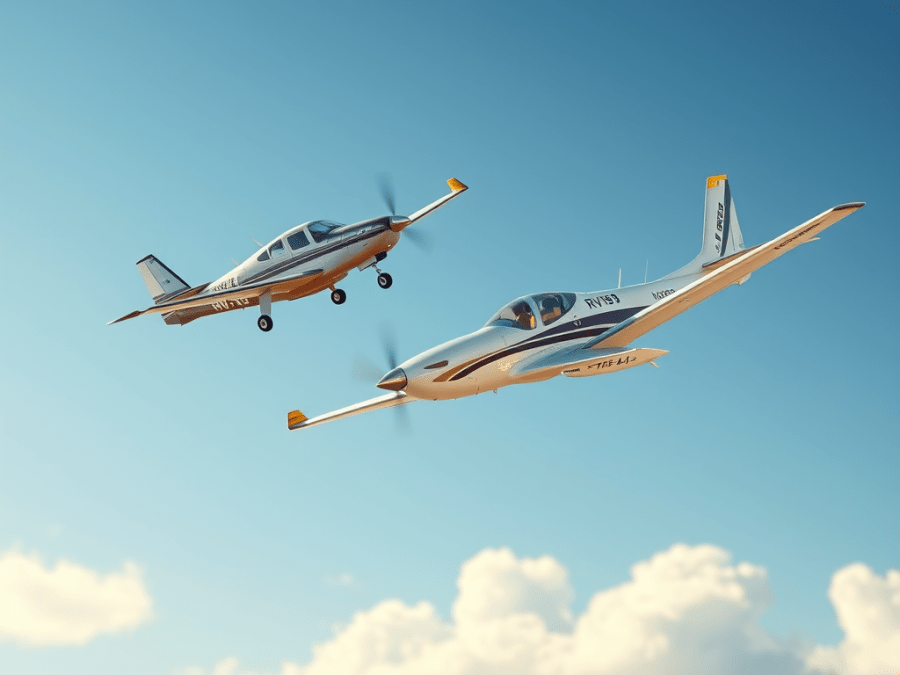
Stu Simpson and his friend, referred to as "the Beeve", take off from Kirkby Field with no set destination in mind. Simpson's easily distracted nature leads him to visit Bailey's Field, a strip that holds a special fascination for him. As he continues to Indus, he enjoys the deserted skies and perfect landings. Upon encountering other pilots, they engage in a playful aerial dogfight before deciding to fly back to Kirkby's together. The day ends with new acquaintances and a sense of longing for more flying adventures.

Pilot Tip: Set Pitch Trim in One Shot

In flight training, it's common to have trouble trimming the airplane. An important rule to remember is to wait at least five seconds after changing pitch, power, or configuration before adjusting the elevator trim. This prevents frequent, unnecessary adjustments and ensures the airplane is properly trimmed. Additionally, there are exceptions to the five-second rule, such as when performing a go-around.

Pilot Tip: Common Go-Around Mistakes

The user experienced unexpected difficulty controlling their Cirrus SR22 during a go-around, recalling smoother training. The response emphasizes the importance of proper power application and managing pitch and yaw during rejected landings. It advises pilots to anticipate control challenges, trim appropriately, and practice go-arounds to enhance safety and confidence.

Pilot Tip: Trimming Your Airplane

Elevator trim adjustment is crucial for maintaining aircraft attitude during flight, especially when power or airspeed changes. Proper technique involves establishing pitch attitude with controls and then trimming to relieve pressure. Avoid trimming during the landing flare to prevent difficulties in go-arounds. Utilizing aileron and rudder trim enhances hands-off flight.

Oshkosh 2016

The narrative recounts an exhilarating arrival at EAA AirVenture 2016, featuring a near-collision during landing and the author's subsequent experiences. Following a thrilling week filled with aircraft displays, informative meetings, and breathtaking performances by the Martin Mars and Snowbirds, the author concludes the adventure by returning home after covering 2275 nautical miles.

One Guy – Two Airplanes

Since joining CRUFC in 1994, the author has built two planes: a Minimax and an RV9. While the Minimax excelled in quick takeoffs and simplicity, the RV9 offers better cruising performance and advanced instrumentation. The transition revealed stark differences in handling, performance metrics, and flight procedures, ultimately favoring the more capable RV9.

SuperSTOL Update (2015-01)

On December 17, 2014, the SuperSTOL made its maiden flight after thorough preparation. The pilot conducted several short hops, confirmed its controllability, and completed multiple circuits. The aircraft's performance, especially in slow flight, was remarkable, with take-offs in three seconds and manageable touch downs at low speeds. The pilot plans to accumulate more flying hours for further exploration.

From the Cockpit (2013-11)

The author reflects on past writings and the permanence of online content. They share insights from personal flying experiences, emphasizing the importance of preparation for engine failures, such as maintaining airspeed and altitude awareness. The narrative concludes with the enjoyment of recent flights and anticipation of upcoming club activities.