

On Dec 17, 2014, the SuperSTOL took to the air. It was close to a month’s wait from the time I was done until I got all the proper papers in hand. Garret was kind enough to come out and be there for photography and safety, no need for a crowd. The plan was several short hops up and down the runway to confirm all was well. The air was cold and still creating great acceleration. Once airborne at about 5 feet above the ground I slowly checked the controllability. After about four short hops, proving all was well, it was time for a circuit. It flew the same hundreds of feet up so now it was just time to get comfortable with it. I soon set up to land and managed it without much trouble. Since it all went so well, I flew half a dozen more circuits then taxied to the hanger for a full inspection. I made a slight stick adjustment as I did not like where it was in cruise. After that I went up again and just cruised around to get the feel and put some time on the engine. It was a great day to finally have flown it.
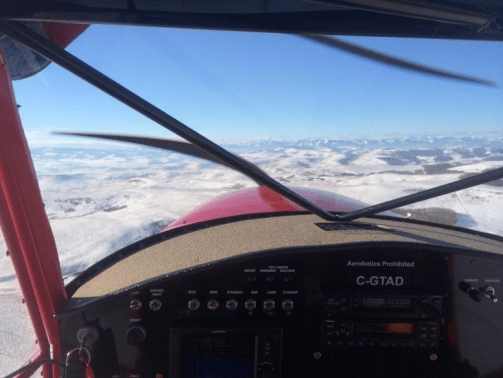
So now, as of Sunday, I have 22 hours on the plane. It has been loads of fun exploring what it can do. It is quite a change from the RV 10 but has many similarities to the Avid I once owned. One being it is flipping cold and drafty at -15ºC! There are a few things I can do to help but really, I plan to always fly with clothes on that are needed for the current weather I am flying in. If I am cold outside walking then I am not dressed warm enough to fly. It’s not that bad, I’m just spoiled by the infinite heat of the RV 10.
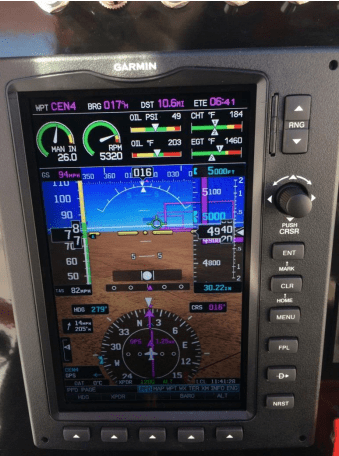
Take-offs are in all of 3 seconds for the most part. Hold the brakes, full power, once the turbo kicks in, release the brakes stick full forward and then back in about 3 seconds. Not much time to do much else. It easily tracks straight. Once airborne you need to pull the nose way up to load the prop up. If you don’t it, will redline the engine and then you need to pull power. At 50 mph it’s at a ridiculously high angle and really going up. I retract the flaps once in the climb… about 2 seconds after lift-off.
In cruise it is hands off in smooth air. You can maintain controlled flight with rudder and you can climb or descend by just leaning forward or back. It really is that balanced, or unbalanced depending on how you look at it. Throw some turbulence in and WOW, do you ever have to fly it. I would NEVER fly this to Oshkosh. Maybe as I get more time, I will think differently. Where it really excels is slow flight. Really slow flight. Cruise is 88 mph at 5500, 82 of 5200 and 78 at 5000. Adverse yaw is very pronounced so you need to fly lots with your feet.
To set up for landing you need to slow it way down to get the slats out. So you pull power and pull the nose up. At 45 mph the left slats pop out and then the right. Once that happens you pull on the flaps. Slats will go back in around 52 mph. I find 40mph is perfect approach speed. It’s all quite the balancing act though. Power will create pitch up as more air goes over the elevator. Pull power and the nose goes down so then you add more elevator to keep the nose up. Sink rate of course goes up. Slow power adjustments make it all more manageable to set your touch down point. As you get to the flare, you add power and it will pitch the nose up allowing you to slow down even more. Maintain most control with rudder at such a high angle. Keep the high angle and then chop the power when the tail touches. You can even chop the power sooner and it will really drop in, the gear takes it just fine. 32 mph slow flight is very manageable. Touch down is in the 20’s.
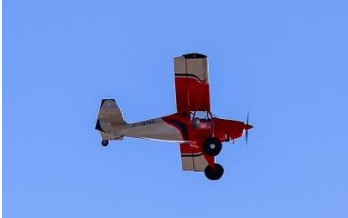
Once I get my 25 hours done it will allow me to go exploring, then I will really learn how to fly it.
 Calgary Recreational Flying Club YYC