

Ok, I’ll bite. In his winsome style Stu Stimson asked his readers to “take a few minutes (ha ha) to jot down highlights of their own flying careers”.
Well, many days of sweating over a hot keyboard later, here are mine. And despite Stu’s belief that the first solo moment is “too cliched and we have all been there” that’s my start up point. Because let me ask: how many did your first solo flight without one second of dual instruction? I did. Here’s how it happened.
I signed up to learn to fly, in ultralights, in the late 70’s. The then method of instruction was to put the pupil in a single seater (that’s mostly all there were) with a head set receiver (no mike) and an instructor standing with a hand held transmitter at the end of a medium length, rough grass runway. Training time was very early (like 4:30 am) with no wind.
The drill was to taxi the Eipper Quicksilver two axis motorized hang glider slowly, then faster, over and over up and down the runway until a slight “crow hop“ was achieved. This could take 2 to 3 hours of runway time over several mornings. The objective was to get muscle memory to gradually push forward on the throttle until a foot of daylight appeared under the wheels, and then IMMEDIATELY push down on the stick to get the wheels safely back on the ground.
The theory was that the hops become higher and longer, i.e. two or three before running out of runway. At some point the instructor would deem you safe to do a circuit. His message blessed you on your way and off you flew, hopefully to return with everything intact.
This method has some history, namely in gliders in Britain and elsewhere, in early days and has a surprisingly good safety record. I return to the story.
Near the end of my about my 2nd day, confidence brimming, I hit a hump in the runway which coincided with a sizeable gust of sunrise driven headwind, and found myself 15 feet in the air! The headphones shrieked “ Get her down” at which point muscle memory kicked in with a solid push forward of The Throttle: Wrong Muscle, wrong lever.
I’m now 100 feet up with more air under the wheels than runway remaining. The screams in my ears must have sorted my synapses. A quick PUSH on the stick and PULL the throttle brought my first solo to a solid landing in the tall weeds beyond my instructor. His face was whiter than mine when I turned to look at him. The memory lingers.
Once cleared to fly ultralights, I purchased, brand new Spectrum Beaver single seater. I bought it at an indoor ultralight show at Toronto’s CNE ground for $8500. That price included assembly by John Birch, the local Spectrum dealer, and 10 hours of dual instruction in his personal two seat trainer at Mansfield Ontario. John was a great instructor and as good as his word, and from him I really learned to fly.
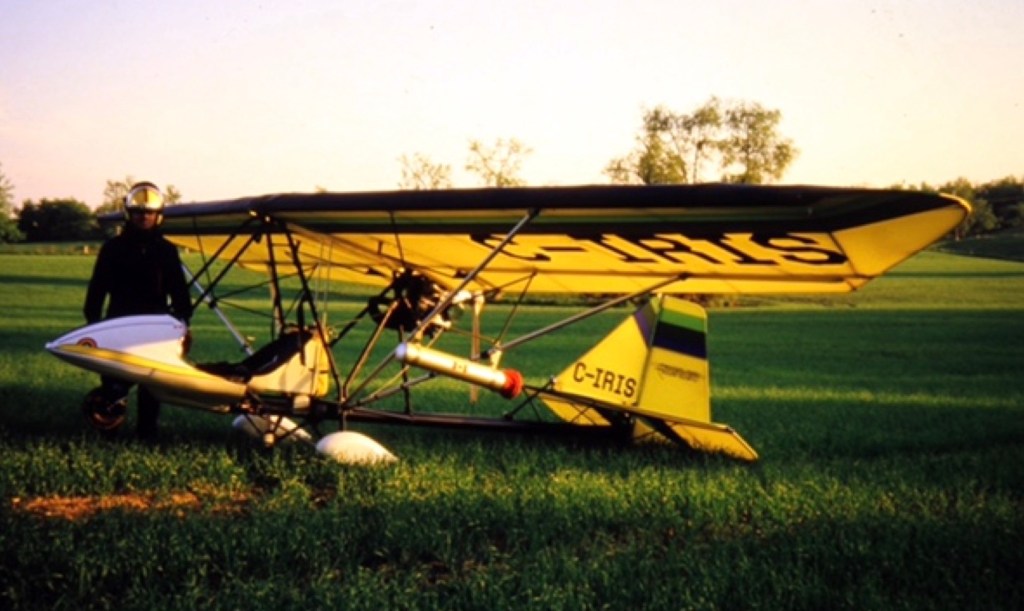
We had motorcycle headsets but no radios, our Beavers had no flaps and no brakes but could land almost anywhere and John taught me how.
I recall one landing on top of a hill in a field near Mansfield. There was a.farmhouse nearby and out of it poured about 10 rough looking guys, all brothers, and one beautiful beautiful sister.
They gave us a rousing welcome, a “ Come Back Anytime” farewell but sadly I could never find that hill again. John too moved on , to design and build the first ever Merlin.
The Beaver gave me many happy hours, all on a single cylinder 2 stroke
producing 28 horses worth of thrust. Like Stu in his early airplanes, some flying choices can be questioned in later years.
I hangared my new plane on a horse farm near Milton Ontario, an area noted for urban build up, squirrelly winds off the Niagara Escarpment , and big iron approaching YYZ not far to the east. My hangar mate, named Flores, had flown jets with the Dutch airforce before coming to Canada. He was a mild mannered gentleman on the ground but aloft turned into a flying tiger.
On our first flight together (again, no radios) he laid out the flight plan: we would land in a huge rock quarry dug deep into the top of the escarpment easily visible to the west. Flores: “Its after quitting time, all the trucks are stopped, I’ve done it before, it’s great, just follow me”. Duh, I did. The experience of dropping down into a 100 foot hole onto a roadway for machines bigger than a house is unique. Even more-so is taking off with that 100 foot limestone wall staring you in the face as retained ground heat from the just finished working day wells up around you. I needed all 26 horses plus their shoes.. It was one of those INDIA takeoffs . You know, I’ll Never Do It Again. INDIA.
But thanks to Flores I did land safely in orchards, in fields between round bales of hay, and in a lumber yard stacked on each side with solid Kawartha timber Other off-fields were Mom’s farm, in fields of friends and neighbours and eventually on my own few acres near Creemore. There my runway was one-way only because it had a 10% grade down hill eastward to a pond.
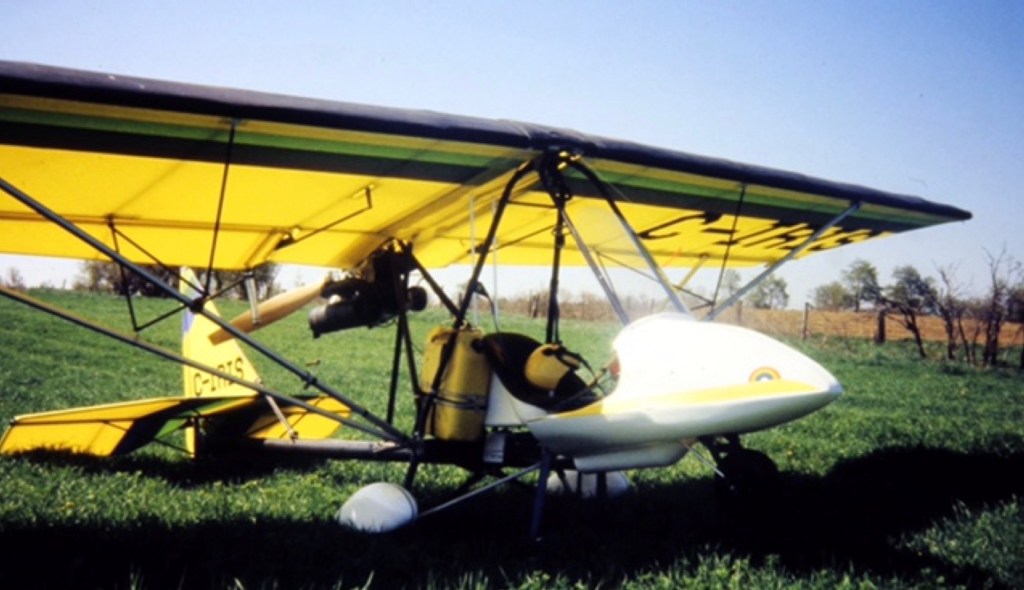
I learned to bring the Beaver in very steep and to pull sharply up just before contact. The upward slope more than made up for the lack of brakes. Some down wind take offs (remember, no flaps) were. interesting, using ground effect over the pond but nothing ever got bent and the memory of having your own place to land on is a precious one.
Creemore is a snowy place so I added skiis to the Beaver and knowledge to my flying. To land in a huge area of newly fallen snow on a sunny winter day is a great lesson in flat light. To fly “backwards” on another winter day into a strong steady wind, while watching frozen Puslinch lake dead ahead grow ever more distant is a lesson in vertigo and perspective. It remains a highlight.
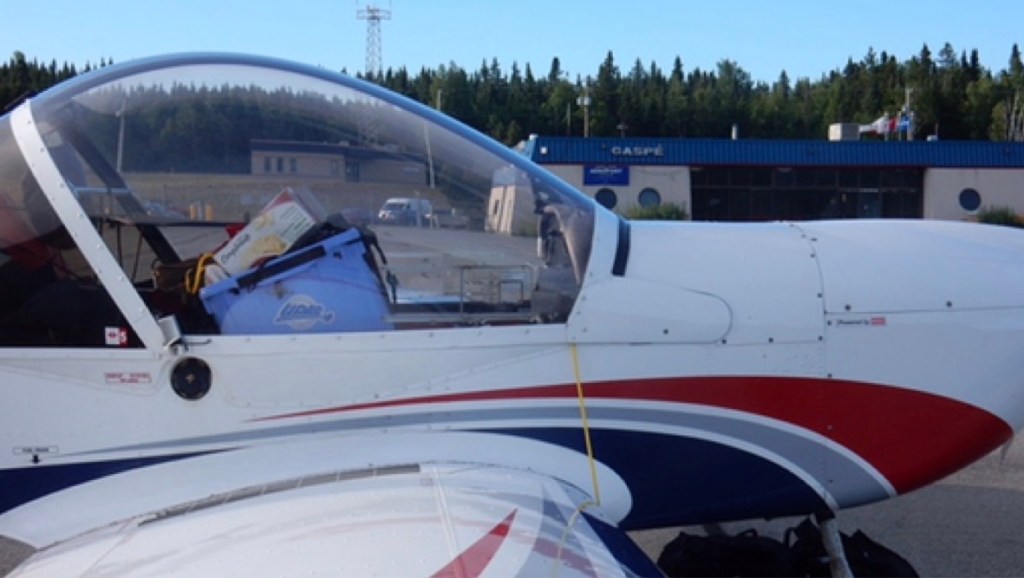
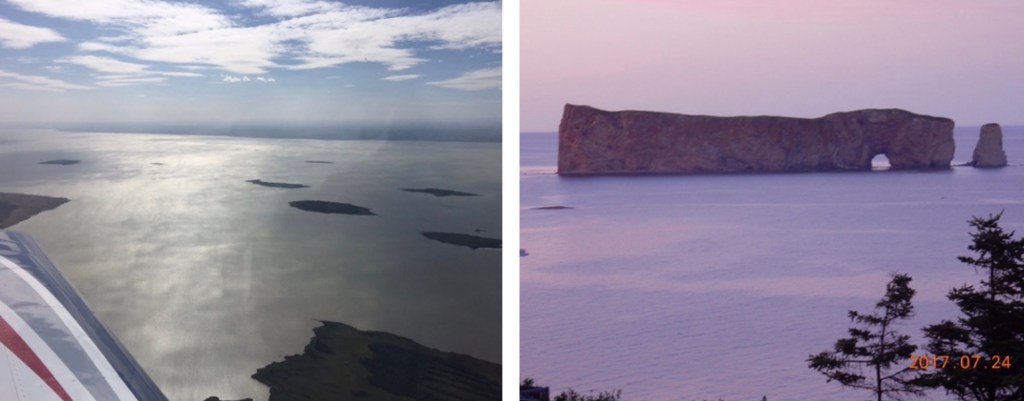
Following Stu’s story line, I turn now to my “Forever” airplane (Stu’s is his Cavalier) C-IDBJ my Evektor Sportstar AULA. In it, I have crossed over to PEI, landed at Gaspe, overflown Maine and Minnesota and crossed from Collingwood, Ontario to Olds, Alberta thrice.
And flown into BC for good measure. And like Stu, my highlights are the hospitality and outright generosity of strangers who came by chance but did everything to get me safely out and back. These folks I refer to as Angels.
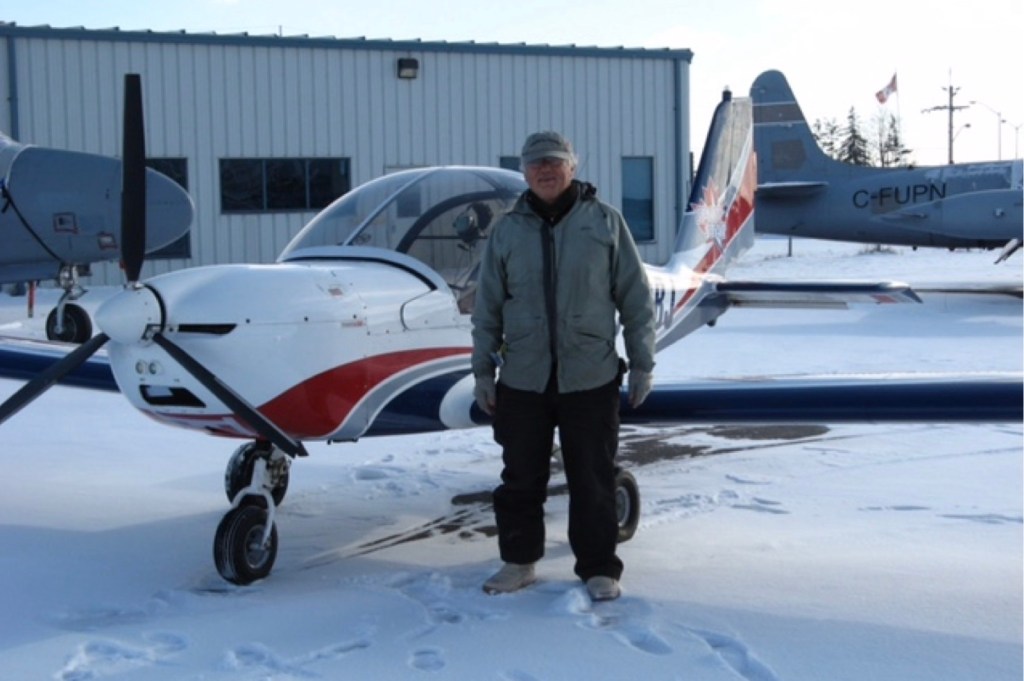
One in Geraldton saw me tying down DBJ in wind, rain and ice pellets, took me to a motel, got me to food, and looked after me and another weather bound pilot for 3 days.
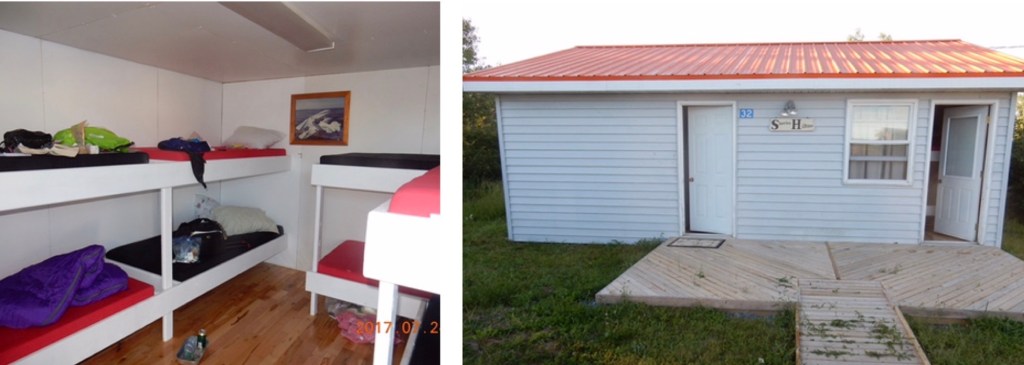
The guys at Stanley Nova Scotia and their wonderful bunkie for visitors and welcome BBQ.
The guy in Killarney Manitoba who squeezed DBJ into his hanger as a sever storm warning blared on the radio then took me for a burger and bed at his house. The guys in Golden who walked me through their high tech self fuelling systems… better adapted to helicopters and water bombers than DBJ.. the list goes on and includes many weather briefers and some very kind controllers in place I was “not familiar with”
. I could name 20 such and I thank them all. They often belong to groups like UPAC and CRFC and I thank those fine organizations for producing such Angels and, like Stu, some of my best friends.
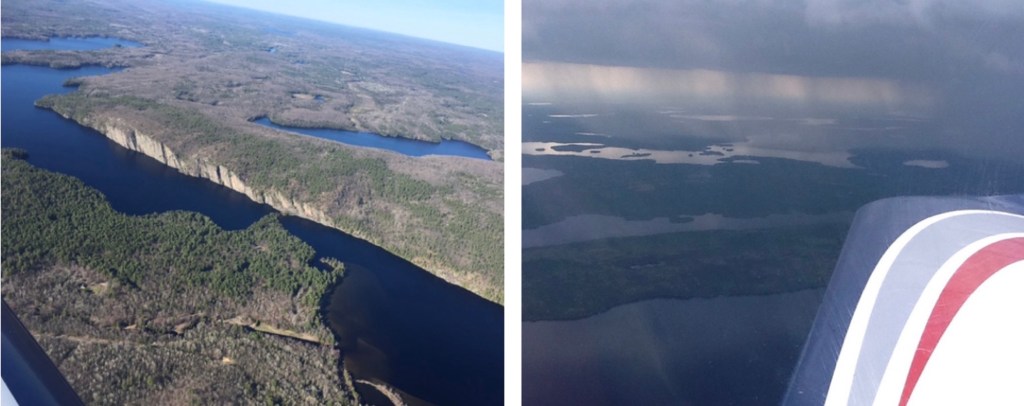
I have written on my first trips into the mountains, and my hobby of following old railway lines and present river beds in Alberta. I love it all. But for me two flights always stand out as favourites. These will have to count as my number Nine and Ten of my top all time favourites.
Number Nine is the most recent entry in my log. I learn something from every flight taken , but the most recent lingers for days. Then the number 10, the top of the best is the NEXT flight just because there is always a new airfield to visit, a new place to see or a new time to to see an old favourite. That hunger for air under one’s feet can’t be satisfied until I take it. I’m grateful.
 Calgary Recreational Flying Club YYC