
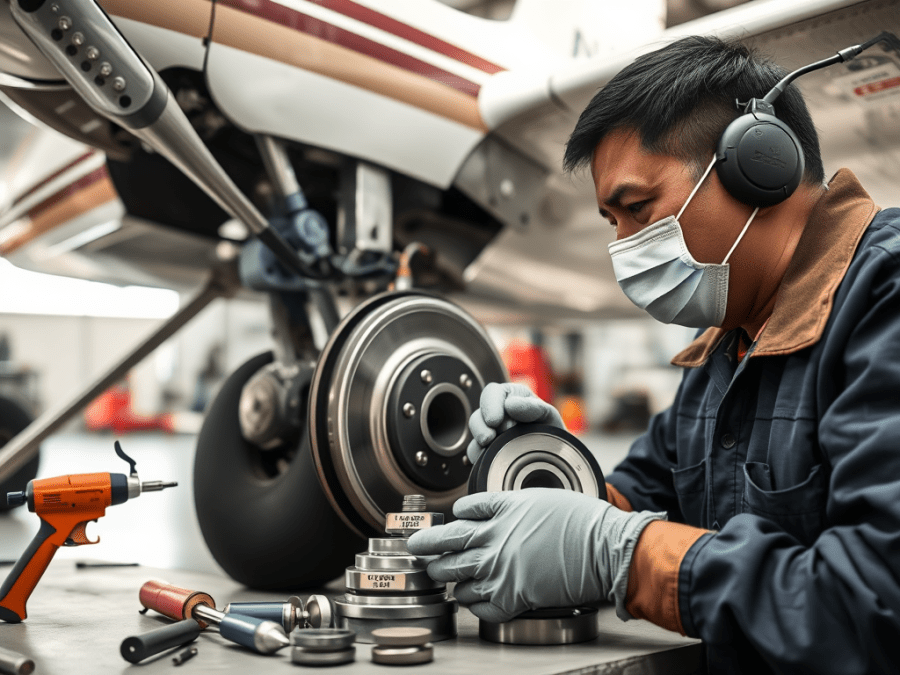
Part of your regular airframe maintenance needs to include checking your brakes and repacking your wheel bearings. It’sa good idea to do it annually, or even more frequently if you operate your plane in a dirtier environment such as grass strips, or other off pavement areas, especially wet ones.
If you choose to ignore maintenance on these two key items the cost of letting them wear out will be much more expensive than being proactive. This is a bit of a messy job but it’s not too difficult. If you have a certified plane I suggest you have your mechanic show you how to do this correctly according to the maintenance manuals for your plane. Also be sure to have them instruct you on making the correct logbook entries.
To do this job you need lots of brake cleaner or degreaser solution, preferably a biodegradable one. A grease gun is useful but not necessary, and you need some high temperature bearing grease. I used Lucas Oil Red and Tacky, from Canadian Tire. If you want to use aircraft grade grease, Aeroshell 5 is a popular choice and can be had locally from Kadex, or through Aircraft Spruce. You’ll use some sort of mineral spirits, like acetone or turpentine, to wash the bearings in a small container, and you should absolutely wear rubber gloves. When using such mineral spirits a shop mask will be a healthier choice to use, too. Keep the work space well ventilated and free of sparks or open flames , as these solvents are flammable. Have plenty of shop towels nearby because you’ll use them.
On my plane, a Zenair CH250 tail-dragger, I have Cleveland wheels and brakes,which are fairly common. There are many sizes and variations of brakes so you obviously need to know which assembly you have in order to get the correct brake pads if you need to replace them. Properly kept maintenance logs will contain this information, too.
Usually the wheels and brakes will have a label attached, or be stamped with apart number, such as 30-59 in the case of Clevelands. All Cleveland’s wheel and brake parts have stamped numbers. Take pictures of the part numbers to have on hand when you need them. Most parts manufacturers usually try to match their parts with the more commonly used brands, such as Cleveland or Grove.
The bearings will also have a part number written on the side so you may be able to buy these from a local bearing supply store instead of the more expensive aviation versions. If you take care of your bearings, however, you may never have to change them out.
The first thing you need to do is jack up your plane and remove the wheel. You may have a large nut and cotter pin, or in my case the wheel pants mount has a large taper pin to hold the wheel on. Remove the wheel and place several large blocks of wood under the axle in case the plane slips off of the jack. What works best for me is to take both wheels off and bring them home to my shop there.
Before you get started, I would recommend watching this YouTube video which shows repacking Cleveland wheel bearings:
Now the messy part begins. Using degreaser or brake cleaner get both sides of the wheels as clean as possible before you start. It’s a good idea to keep everything clean until assembly is complete.
Doing one side of the wheel at a time, remove the retaining clips, washers and bearings, and clean everything in mineral spirits or brake cleaner. This includes the bearing races, which are the spaces in the wheel where the bearings live.

To repack the bearings with grease you can use a bearing grease tool or use the palm method to repack the bearings.
Once the bearings, washers and retaining clips are reassembled wipe away every last trace of grease to prevent any getting onto the brake pads. This is actually really important so that excess grease doesn’t spray or spatter onto the pads with normal wheel rotation.
If you need to clean the wheel after re-installing the bearings, don’t spray the wheels with degreaser or brake cleaner. This is to avoid contaminating the newly packed bearings with any over-spray or splash. Instead, spray a bit of cleaner or degreaser onto some shop towels and wipe away anything in that manner. Take a moment to thoroughly clean the axles now, as well.
Since the brakes are off, now is a good time to thoroughly inspect and service them. It’s a pretty straightforward process, which I’ll cover next month.
Here’s another YouTube video showing that process:
 Calgary Recreational Flying Club YYC