

Over the last few months I’ve talked about learning to fly IFR and how it’s different than what we do as VFR pilots. If you’re wondering if you could do this in your plane then this ought to give you some things to consider.
The first thing to know about flying IFR is that you need an aircraft that’s approved to fly IFR. If you look at the C of A for your aircraft, or in the case of a homebuilt, the Special C of A, you may see that your aircraft is authorized only for VFR flight and prohibited from aerobatics.
The CARS describe, in excruciating detail, what you need for legal IFR flight. The short answer, though, is the standard 6-pack of instruments, a heated pitot, all the lighting and other stuff you need for night flying, and suitable radios and navigation equipment for the type of flying you’ll do.
It used to be you’d have dual com radios and dual nav radios. The nav radios would include at least one that could track a VOR and one that could read a VOR and an ILS for glideslope. These old school set-ups invariably featured an ADF receiver for use with NDBs. Sadly, this equipment is no longer sufficient since there are very few VORs and almost no NDB’s left in Canada. And if you ever check NOTAMs you’ll likely find the local VOR that still exists is likely unserviceable.
Nowadays, at least one GPS is required, BUT your portable Garmin Aera 760 or 2/3/496 isn’t sufficient. You might have a phone or tablet running ForeFlight, Fltplan.go, or another EFB that uses its built-in GPS, but that’s not IFR legal, either. You need a panel-mounted, IFR certified GPS with current database updates. The updates come out every 28 or 56 days depending on which charts you use.
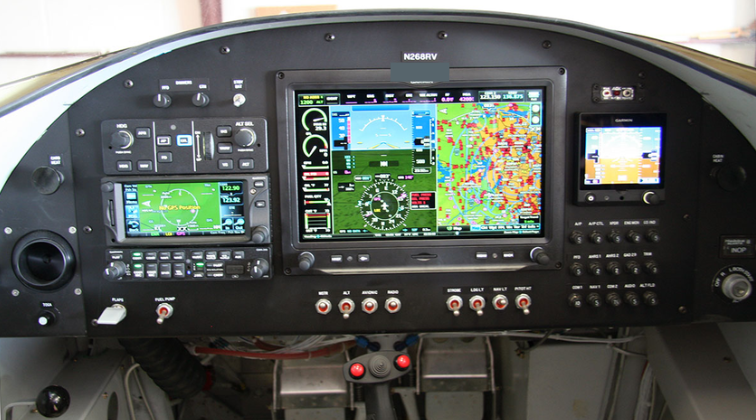
So, in addition to two com radios you’ll need at least one GPS and one nav radio, plus a suitable indicator instrument (called a nav head), or a horizontal situation indicator (HSI), which overlays multiple VOR/ILS/GPS functions onto one instrument. All of this allows you to fly a full instrument approach.
A bare minimum setup would look something like this:
- Garmin GPS175 GPS
- Garmin GNC215 NAV/COMM radio
- Garmin GTR205 COMM radio
- Garmin G5 to replace the artificial horizon and another G5 as an HSI
- All the suitable antennas and ancillary equipment
For homebuilt aircraft this will cost $25-$30K, and for certified planes add another 25%, minimum. I’ve only listed Garmin equipment here, but there are other manufacturers, too. And naturally, the prices are only going to go up. If you’re able to wire all of this up yourself on your homebuilt, you’ll save ten grand, but this isn’t an option for certified aircraft. The subscription fees to keep this legal will be more than a thousand dollars per year.
Remember, this is the bare minimum for occasional IFR. If you were planning to fly IFR regularly you can expect to at least double this cost. Oh, and I haven’t even talked about autopilots yet. They can get pretty pricey.
If your plane was already certified for IFR, and your existing radios are working pretty well, then you may have a cheaper option. Remove the ADF and/or LORAN for a Garmin GPS175 and possibly replace one nav head. This might get your costs down below $15,000.
It’s possible to find used equipment but unless you’re doing the wiring and installation yourself, it rarely makes economic sense. The Garmin GNS430 and 530 units are still very popular but they’re also at their end-of-life as far as Garmin is concerned. Thus, they no longer enjoy factory support.
One common problem is for the display screens to stop working completely and there are no aftermarket screens available, even from sites like Alibaba, eBay, or Amazon. There’s a chance that you could get a GNS430 for $4000 only to have it quit a year later. The mounting racks for the GNS430 aren’t compatible with the GTN650 which is the similar current model.There are some other factors about IFR flying that are crucial to consider, too. Primary among them is staying current. In southern Alberta we enjoy the highest amount of VFR weather in Canada on an annual basis. Thus, the opportunity to regularly fly actual IFR is more limited in our region. Also, our longer daylight hours outside of winter obviously mean fewer night hours for flying in warmer weather.
It’s absolutely crucial to stay current if you plan to be flying in IFR conditions, either regularly or occasionally. The accident databases are full of stories that ended badly when pilots got in over their heads, even if they were IFR rated. You need to plan on the expense of staying current, keeping your plane and equipment current, and you need to make the commitment to do so.
Winter, spring and fall IFR conditions bring an added danger of ice. If you find yourself in icing conditions, can your plane safely handle that? Honestly, at our end of the aviation spectrum it’s not likely.
IFR training is phenomenal learning for pilots. IFR capabilities – for the pilot and the airplane – can be a terrific bonus for your flying, but you really need to be honest with yourself about how often you’ll use your and your plane’s IFR rating, and if you’ll actually stay current enough to use it safely.
As you can see, equipping your plane, either homebuilt or certified, for IFR isn’t for the faint hearted. While these costs may certainly eliminate an IFR panel from consideration in a basic homebuilt, having this capability is valuable when you can legally and safely take advantage of it. Knowing you aren’t being kept at home with 800 foot ceilings makes your airplane much more reliable and more likely to keep your plans on schedule. If being able to go places reliably is important, then an investment in IFR might be the right thing to do.
 Calgary Recreational Flying Club YYC