

Some impressions from a transplanted Easterner
Between September 6th and 10th of 2020, I flew my SportsStar from my then home base of Collingwood Regional, ON (CNY3) to a new hangar at Olds/Didsbury, AB (C- EA3). A month later my wife and I moved ourselves and many “things” to a new house and a changed retirement in Canmore, a resort town in the Rockies close to Banff National Park. November was devoted to settling in but on December 2nd 2020 I started flying again. I’ve been aloft over Alberta in every month since then. This article sets out some of my impressions gained in hope that more UPAC members will consider flying here.
In general terms, the recreational flying scene in Alberta is advanced but ultralights are still in the shadow of General Aviation aircraft. Perhaps it’s Alberta’s prosperity, perhaps it’s the cold snaps, perhaps it’s because things are not crowded here and it’s an advantage to be able to cover longer distances.
That said, the Calgary Recreational Flying Club (COPA Flight 114) by word and deed welcomes all types of planes and pilots, whether ultra-light, experimental or fully certified to its monthly meetings and SkyWriter newsletter.
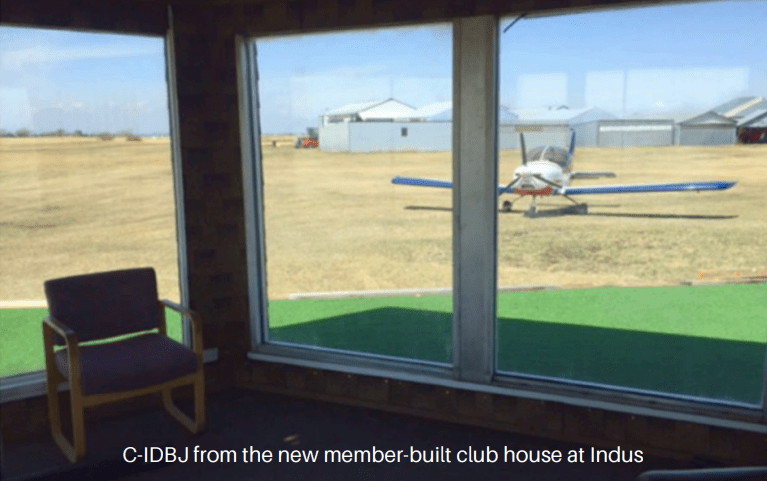
I’ve landed at dozens of Alberta airfields by now and have yet to hear a negative syllable about ultralights, only interest and enthusiasm for our type of flying. Winter’s Air Park (CFY4) at Indus is one of many grass strips close to Calgary and noteworthy for the number of ultralights there.
One pleasant surprise is the quality and quantity of comfy clubhouses at small airports. Olds/Didsbury, Beiseker, Brooks, Flagstaff (Alberta, not Arizona) and of course Indus are some of many that I’ve used. Usually there is a coded door with broad hints as to what to punch in, and if not, usually a good guess (think emergency or local frequencies) will do. Clean facilities and well stocked vending machines or honour jars make short cross countries a pleasure even when, as is often the case, nobody is there to greet you unless it’s a summer weekend! It feels like a real fraternity.
Another pleasant surprise has been the frequency and duration of good flying weather all year long. It was by no means by chance that most Commonwealth Air Training Crews did their initial flying over the prairies: there is more open ground yes, but lots and lots more sunshine.
From Canmore to Olds is a 2 hour drive, a tough adjustment after living within 20 minutes of Collingwood Regional. But I can usually plan to get 2 or 3 days of good VFR flying at a time and for me overnights in Olds are easy.
Winter weather keeps many pilots grounded, but winter flying is often excellent. Cold snaps are deep, but short, (heated hangars are nice) then the warm chinooks winds arrive almost on schedule. Snow cover is much less of a problem than in southern Ontario. It’s dry and scanty. I’m told that Calgary does not clear the streets of snow and from my own observations over many winters that is true.
Two weather factors do impact the daily fly or don’t fly question: Winds, which can pick up in a hurry, and winter ground fog. The latter has proven to be the biggest issue with my winter flying. Nav Canada tries to predict it, but it’s so low lying and sporadic that it’s a hazard. One learns to keep a close eye on the ground no matter the weather. The layer may only be 60 feet thick but it starts at ground level so in any emergency over that white blanket one would have a problem.
A related issue is forest fire smoke, which can occur from early spring to very late fall. Smoke is insidious, one can see for 3 miles one moment and in 10 seconds be into smoke so thick that the ground disappears. These thickenings are random, hard to see from afar, and demand the utmost caution.
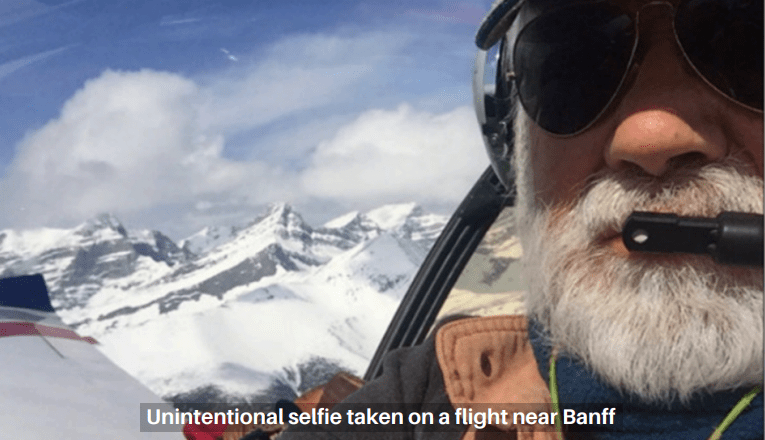
By early 2021 I began to venture into “The Rocks” as the mountains are called. It’s a novel thing to be looking up at landscape all around. I choose only “Slam Dunk“ days. From talking, reading and trial experience I have become quite comfortable with flying into the mountains WHEN, and only when, weather is good, pireps are favourable, and the longterm outlook from Nav Canada’s experts is good and truly long term. I’ve turned back many times, always a little wiser for the next time.
Thermals and rotors are less of a factor on quiet cold days than warm ones. In winter it’s imperative to have emergency clothes, food, fire starters, show shoes and some form of satellite communication. I use a ResQ Link PLB and derive great comfort having it tied right to me. Flying only over roads while in the mountains is a good idea, but not always possible.
Intensive route planning, good maps and up to the second situational and route awareness are keys. So are at least one and better two back door escape routes kept open. Parks Canada has a vast array of visible trails even in the remotest areas of the 4 contiguous mountain National Parks (Banff, Jasper, Yoho and Kootenay) and the rivers throw up many gravel bars that offer a bit of peace of mind. I have taken flights over areas such as the Siffleur Wilderness that are challenging, but under the right conditions they are do-able. Take bear spray and know how to use it in case a black or brown bruin comes sniffing to find out what just landed in their backyard.
Here are two last notes on mountain flying. First, there is a lot of helicopter traffic to listen and watch out for in some locations. There are constant tourist flights around Canmore, Banff and near the Colombia Ice Field. SARS rescue flights are also common for climbers, injured skiers and road accident victims. Heli pilots excel in keeping others informed of where they are but one must listen.
The second factor is to know the height of passes and have altitude to spare when crossing them. Highwood Pass southwest of Calgary is the highest pass in Canada with a paved road.
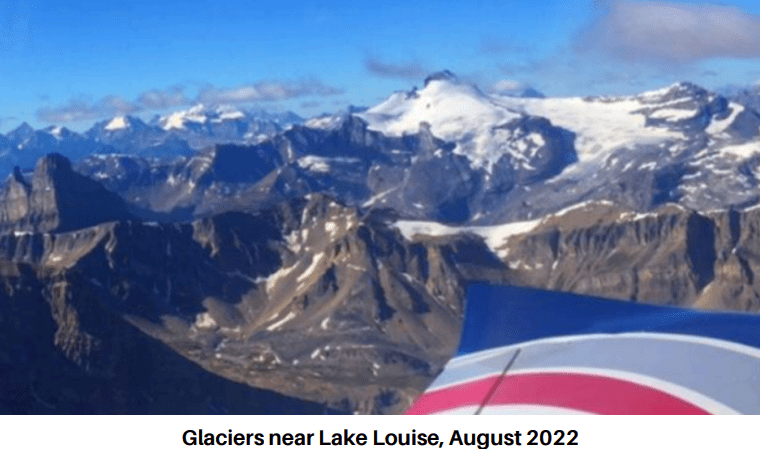
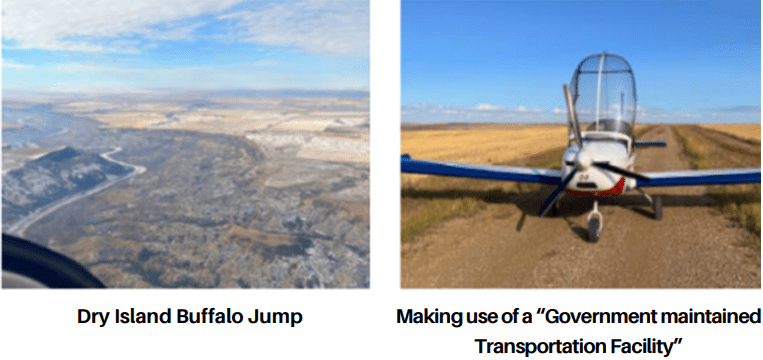
It tops out at well over 7000 feet ASL and the the Clearwater Pass which I have cleared a few times (no road, but a horse/hiking trail) is over 8000 feet ASL. Clearing these passes can be easier than anticipated, or the opposite. On one occasion a steady updraft took me to over 11000 feet in only a few seconds and gave me a bit a surprise as well as lots of clearance for the way ahead. Flying over flatter ground is just as pleasurable and more common. The Red Deer River badlands are spectacular, winter or summer and easy to access.
I enjoy hunting for Alberta’s legion of ghost towns from the air, and even better is to follow the miles and miles of abandoned rail rights of way. They leave one awestruck as to the amount of labour, money, engineering expertise and hope put forth here in the early 20th century before gas engines and paved roads changed everything.
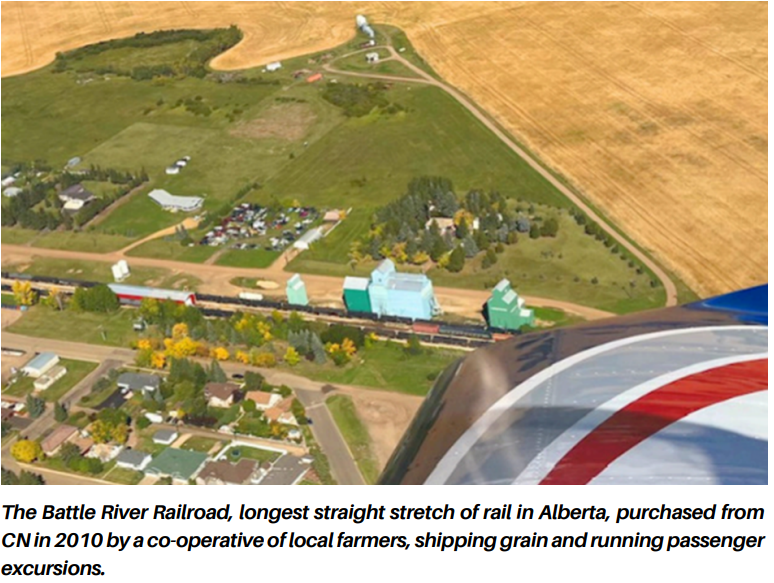
And this born and bred Ontario farm boy is still taken aback by how much stuff that is good to eat is grown here! Feed lots, endless fields of canola, wheat, corn and grazing cattle stretch to every horizon. The scale of the farms and size of farm equipment below the wings is beyond impressive. And it isn’t all the same. There are grasslands, near deserts, “knob and kettle “ hills and aspen groves, dry lakes, alkali lakes, foothills forest lakes, its never boring. The aspen are golden in the fall, the fields of stubble golden in winter. Spring rains bring a delicate green unlike that in Eastern Canada. And the clouds in summer are magnificent.
One big factor differs from where I flew in Ontario. Collingwood sits at 730 feet ASL, Olds at 3360 ASL and the Red Deer Forestry strip (CFR7), a nice foothills destination for us is at 4646 ASL. Aircraft performance difference is noticeable, and not just on hot humid days. One must learn to adjust. Enough said.
Stepping stones to Alberta are Elliot Lake, Wawa, Marathon, Chapleau, Geraldton, Atikokan, Kenora, Dryden to name some for some eastern UPAC folk to fly patiently and safely through the challenges of Northern Ontario. Your reward will be fine flights, warm welcomes, and great memories!
(*Ed-This article was reprinted from UPAC LightFlight)
 Calgary Recreational Flying Club YYC