

As I mentioned in my President’s Message I finally finished the installation of the Number 4 and 5 cylinders. One set of rings on Number 5 was broken into multiple pieces but fortunately nothing went past the other rings into the crankcase. That would have caused much greater damage or a complete engine failure. Photos of the rings were in the September Skywriter.

After many hours of working on the engine the first break-in flight occurred on November 13. The break-in procedure involves running the engine as hard as you can. In other words, “fly it like you stole it”!
You must keep the manifold pressure (MP) as high as possible and vary the rpm for at least two hours. Our field elevation of 3,400’ ASL requires that I had to fly low to maintain a high MP. At 1,500’ AGL the highest MP attainable is 23” so I flew at 1,000’ AGL or lower for over 2.4 hours.
After two more flights of 2.1 and 2.2 hours on November 19 and 28 I now have 6.7 hours on the new cylinders and there has been no noticeable oil consumption. I would say the break-in is successful!
So what do you do when you have no destination in mind but need to fly for two plus hours at low altitude?
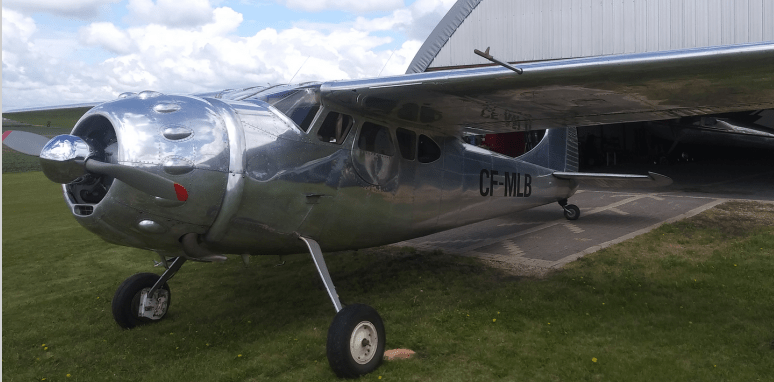
Here are my flight tracks from the last two flights. On November 28, I flew with Stu while he stopped in Sundre and Olds-Didsbury. Luckily the weather was beautiful – smooth, little wind and fantastic visibility. All three flights were very enjoyable and I’m looking forward to many more hours in the 195.

By the way I submitted the Nav Canada Public ADS-B Performance Report (PAPR) after my November 28 flight and passed with flying 8 colours in spite of having a bottom mounted ADS-B antenna! It means I don’t have to install a top-mounted antenna. Great news!
 Calgary Recreational Flying Club YYC