

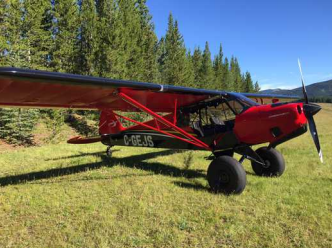
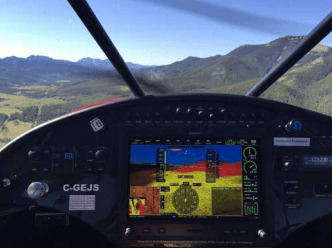
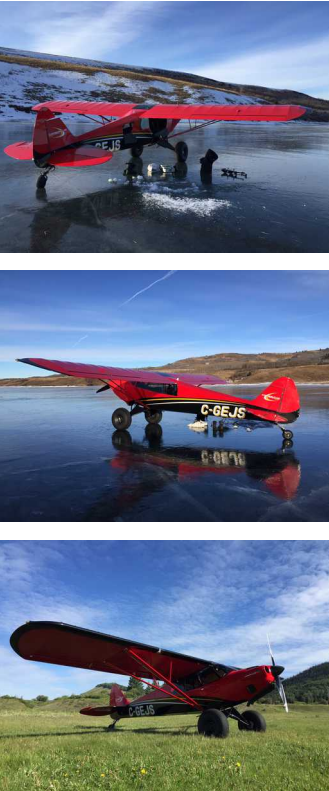
It has been a great seven months with the Cub. With just short of 100 hours on it, it has given my family some great adventures. Back in June 2016, I finished the Cub Crafters Carbon Cub after a ten-month build. It has 31-inch Alaska Bushwheels, Baby Bush tail wheel, G3X panel with A/P, and a 180HP Titan 340 Stroker. I figured I would write about the fun I have had thus far.
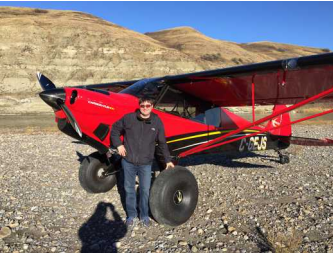
It is not an airplane that I fly for travel; it is what I fly just to fly. When I get in the cub, I never really have a plan. I never really know where I might end up. That is what I like about it; I have so many choices as to where I can go. Everything from river gravel bars, lake shores, landing in friends’ fields for a visit, old non maintained back country strips to frozen lakes. The places you can go become quite unlimited. Going fishing on the river is always fun. I have taken many people to the Old Man River and the Bow River. The first landing on any gravel bar needs to be done with caution. There is always something where you wish it wasn’t. I like to do a high inspection pass to decide on the best location to roll out and then I make the approach as if I was landing with full flaps and get really slow and tight in to have a good look.
Everything is much different close to the ground. Next approach I land. The best is to land tail low and get the mains stuck on by letting the stick forward. Keep the tail up with heavy braking and be ready to weave around obstacles on roll out. The rocks can be fairly large, so you want the tail up until you stop and keep the tire pressure in the mains low. Five Pounds really smooths out the ride on the rough stuff. With the tail up it also decreases the chance for rocks hitting the tail. It is almost impossible to avoid but you can at least reduce it. Once stopped, I shut down and clear the debris. The first time in is always the trickiest. If you don’t land in a particular spot often, do as above each time because things change. Take off is easier as you are now familiar with what is on the ground. Get the tail up right away and accelerate on the mains. In no wind conditions I take off down river and land upriver. Gravel bars look much smaller in the air, so sometimes you need to get a closer look to really know if it is safe. Four hundred feet allows me to get in and out with a load comfortably.
When landing at a friends’ place, there are usually obstacles like power lines, trees and fences. Make sure you know the area before going in. Fields are never really smooth, and the badger holes can be pretty big. The large tires allow for these types of landings to be done safely. You never fly near a house and make the approach in such a way that will give you the most distance from neighbors. If I visit someone for the first time, I always checked the area out on the ground first. Checking it out like I do a gravel bar is not good airmanship. I commit, then power back and quietly “glide” in. Most likely not even heard by anyone. Same thing on departure. Make whatever turn required to stay clear of the neighbors. If you don’t need full power after leaving the ground, pull it back for less noise once at a safe altitude.
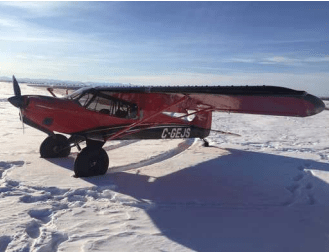
Flying in the snow is a lot of fun as well with the large tires. Six inches of snow is about the maximum I would land in unless I took off out of it first. Dry snow is much different than heavy, wet, or packed snow. When landing on unknown snow, (you should know its depth based on your area) I keep the speed up. I use two notches of flap for less drag than full flaps. As I approach the touch down, I carry about 15-20mph above stall and let the wheels kiss the snow. If they pull hard, I just pull back and the plane flies off. If they feel good, I load them up a bit more with forward stick and see if there is any change. If all is well, I then start to slow down by pulling some power. Don’t ever commit to the landing until you know for sure. If you went in full flaps and slowed right down before touch down, if the snow was too deep you would likely nose over. An expensive mistake!
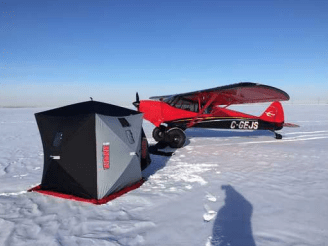
Lastly are lake landings. If there are no cars on the lake I don’t land. Well, that doesn’t always work, but the important point is making sure you know how thick the ice is. I have landed with 6” of snow to perfect black ice. If there is snow, I use the snow landing technique mention earlier. If it is smooth ice, it will be the nicest surface you will ever wheel land on. Unfortunately, there is not always smooth ice. Quite often the drifts freeze and create large ramps so you will have a rough landing. You can generally find smooth areas from the air before landing though. Even smooth black ice has some braking resistance. So yes, you will be able to come to a stop with the engine running.
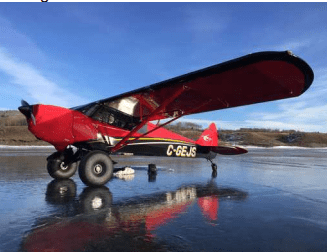
Since the lakes are so large, the use of brakes is not required, and I think is best not to use them at all on roll out. If you land a bit sideways the ice will be more forgiving than the pave. The rudder will give you plenty of directional control. You will likely not notice any difference unless you hit the brake, and nothing really happens.
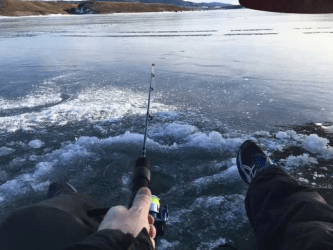
After landing, pull out the auger, fishing rod and enjoy the day.
For take-off, your tires may or may not hold for run up. Do your best to get your engine checks done before takeoff. The only difference with taking off from the lake is the runway doesn’t end. Direction control is much the same as grass. Keep your movements small and there should not be any trouble. Be sure to stay well clear of people, cars and fishing shacks for both the landing and takeoff.
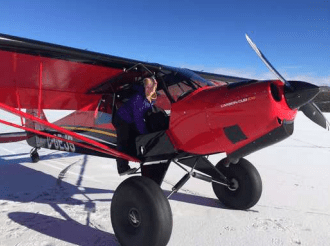
Flying the Cub is completely different then jumping in the RV10 and going somewhere. I love doing both types of flying equally well. Traveling great distances, up high on oxygen, dealing with many different controllers, and airspace is just as rewarding as stopping really short on that tiny gravel bar, talking to no one. Both teach skills that are very useful.
 Calgary Recreational Flying Club YYC