

Flying my paramotor at EAA AirVenture Oshkosh. That’s what did in 2014 and that’s what I plan to do again this July. That seems like a pretty brash statement for a low time recreational pilot from Okotoks. The truth is that it’s not that hard to do. It is a very special privilege that a combination of my aircraft, my training and the EAA allow us to do, and I chose to honor this privilege by taking full advantage of it.
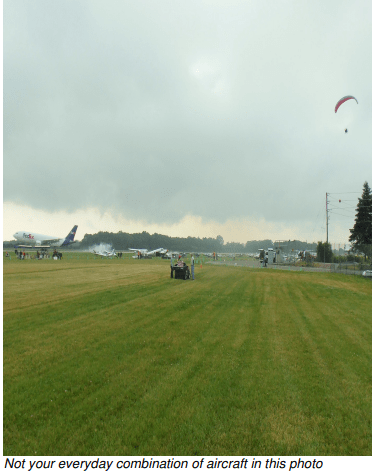
Not your everyday combination of aircraft in this photo
EAA AirVenture is beyond description. It’s pretty much everything to every type of aviation aficionado (except glider pilots). The ultralight aspect of Oshkosh is perhaps a little less known simply because there’s so much else going on. For those who haven’t had the pleasure of going, there’s a little corner of the airport that’s an ultralight pilot’s dream. More than a thousand feet of perfect grass surrounded by enthusiastic spectators and vendors. The thing about this area that’s different from most of the amazing aircraft on this airport is that many of the ultralights fly displays every day of the show. The airport is the busiest in the world during the show, so most GA pilots fly in, park and fly out when it’s time to go home. Ultralights, on the other hand, are encouraged to fly and fly lots!

Paramotors (a.k.a. powered paragliders) are given their own time slots in the morning and again in the evening just before sunset. In fact, we are sometimes the last aircraft flying on the field. Paramotors are simply a backpack mounted two stroke engines in combination with paraglider wings.
My homebuilt paramotor was judged and received an Honorable Mention plaque
To call them the smallest aircraft in the world isn’t exactly right as my particular paraglider has around 28m2 of wing area. However, it does fold down into a bag smaller than my hockey bag and all fits in the back of my VW hatchback. Flying at AirVenture, not surprisingly, requires a fairly detailed one time event briefing and then daily briefings. The information is detailed but fairly simple. There are multiple traffic patterns used simultaneously at OSH. The ultralight pattern is literally surrounded by other faster/heavier aircraft patterns. It must be followed exactly in all three dimensions. From a flying perspective it’s much more restrictive than what most paramotor pilots are used to. Safety is of course the reason for this. This is after all the busiest airport in the world during the event that the fact that we can fly there at all is pretty amazing.
Once registration and briefings are complete, access is granted to the 1200’ perfectly mowed ultralight runway. It’s also sufficiently wide to allow takeoff in most wind directions. Paramotors must take off into the wind. No radios are required on the ultralight runway but there are plenty of volunteers on the runway to signal you when it’s safe to launch. Once airborne, the scenery is absolutely spectacular. Seeing the AirVenture grounds from above is about the only way you can begin to comprehend the size of the event. Camp Scholler and the South 40 are directly overflown in the ultralight pattern, but the entire site is visible from the 300’ pattern. Besides the amazing views of things on the ground there plenty of aircraft in the air to see. Everything from formations of P-51s to an airship to large military aircraft are sharing the sky with the tiny paramotors. P-51 formation in the break and T6 AeroShell team on the roll as seen from my paramotor.
After landing your paramotor you’ll be treated like a star by the hundreds of spectators lining the runway. The short walk from the runway back to the display or camping areas will be made challenging only by all the curious spectators asking questions about your flying machine. Camping is available in the ultralight campground and in the display area (tent only). These are, in my opinion, the best campsites at OSH because they offer great views of the show line. Once you’re finished flying and your gear is stored there are so many things to do at AirVenture that it would take several other articles to begin to cover this. As a paramotor piloting experience AirVenture is quite routine but as an overall flying experience it’s one you’ll never forget. Definitely a unique entry in your logbook.
Dave LeBlanc

 Calgary Recreational Flying Club YYC