
As I sit here writing this month’s newsletter in temperatures touching the 30°C range, it’s hard to believe that we are but three weeks from September. Where did the summer go? Fortunately, we still have a few more weeks of summer flying and many of you have had some great flying adventures.
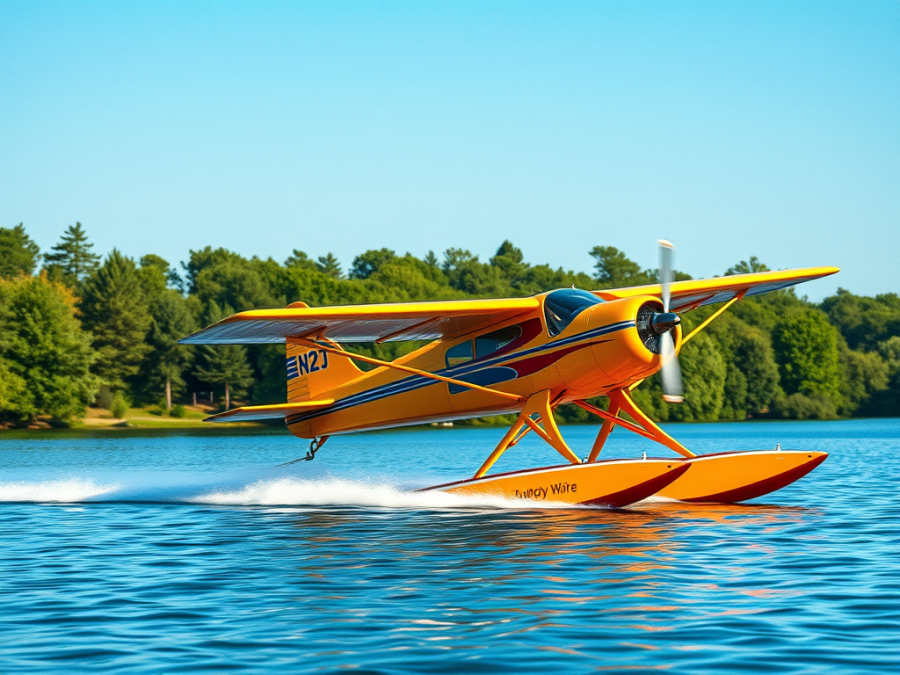
As many of you may have read in last month issue, my father has been getting ready to make the first flights in his newly built Murphy Rebel. I spent a week in June back in Halifax giving him a hand and a second set of eyes to ensure that the plane was, indeed, ready for flight. Well, the final inspection was signed off on July 19th. Early the next morning, CGAAC made its maiden flight of about 20 minutes. Later that day, another 2.5 hours were logged!
The only initial issues that cropped up were with the flap handle and elevator control. On the first climb out, the flap handle snapped from the third notch to the first notch on its own. A little file work on the notches and that problem was cured. The other issue came up later in the day as Dad was performing circuits and the wind was progressively diminishing. In the flare, there was not enough up elevator control to make a nice landing. This proved to be another easy fix with an adjustment to the up elevator stop. 10-hour mark that turned out to be a bad seal on the oil filter bypass valve cover and a small fuel leak out of the line drain. Both have been fixed.
One other issue that cropped up was with the gross weight of the plane. Murphy lists the gross at 1732 lbs. However, on floats, most owners are operating with much higher gross weights (up to 1950 lbs with the right engine/float combination). Although it’s perfectly safe to do so, Murphy’s documentation states 1732 lbs and that’s all the MDRA (Minister’s Delegate, Recreational Aircraft) would accept. The MDRA’s internal policy forbids them from approving any gross weight other than that published by the builder.
Fortunately, Dad approached Transport Canada to see if there was any way to increase the gross weight. With numerous examples of Murphy Rebels with much higher gross weights on the registry, they were quite happy to reissue the flight permit specifying 1850 lbs. In fact, the TC inspector wanted to know if Dad wanted a higher gross weight than that. However, the PeeKay 1800 floats on the Rebel are only rated to 1850 lbs gross weight, so Dad was happy to work within that limit. That gives him a comfortable 630 lbs useful load on floats. With Dad’s 180 lb weight and full tanks of 44 gallons, he can still carry over 180 lbs of passengers/cargo.
By getting Transport Canada to amend the gross weight during the flight test phase, it allowed Dad to only have to do one climb test at the 1850 gross weight.
On August 9th, Dad finally completed his 25-hour test flight period and on August 10th, Transport Canada issued his permanent Special Certificate of Airworthiness, Amateur-Built. Unfortunately, as of this writing (August 11th) the weather has not cooperated enough for him to fly it again. However, there’s a long list of would-be passengers waiting for a ride.
He is also planning to fly it across to Newfoundland next week which includes 70 miles of open ocean (aka, and 70-mile-long landing strip ). He plans to use it at their summer home in Trinity, Bonavista Bay and then hanger it in St. John’s at his friend’s hanger on Paddy’s Pond. Interestingly enough, its hanger mate will be C-GAQM, Dad’s old Cessna 180, which his friend now owns.
Dad hasn’t been the only one flying in the last month. July was a spectacular month for flying in Alberta and I took full advantage of it logging almost 20 hours. On July 22nd, Pat Cunningham, Richard Schmitt and I flew into Vulcan for breakfast. On the way we added Gerry McDonald and Barry Wood in the 182 to our flight. We had a great breakfast but were interested in doing a bit more flying. I was thinking about heading west to the Highwood Pass and following Kananaskis Valley up to Banff and then home via Lake Minnewanka. Unfortunately, by the time we were ready to depart, we could see some significant cumulous clouds building in the valley. That trip would have to wait.
Fortunately, it only had to wait a week! The following Sunday the weather was forecasted to be ideal… as long as we were airborne early. Rather than heading to Vulcan first, then do the pass, we decided to do the pass first. We were off by 08:40 and climbing to the west. This time, we added Glenn Bishell to the flight in his BishCaddy. The weather was perfect and before long, we were entering the pass just east of Lake Minnewanka. We were up at 9500. And the air was cool and calm.
We hugged the south side of the valley as we proceeded from Banff to Canmore then turned right off of Highway 1 to cut across to Nakiska and into the Kananaskis Valley. This is the first time I have flown the mountains without snow. The bare gray mountaintops were accented by high green pastures. I was surprised at how well they can grow in the thin, cold air. As we progressed south through the valley, we came across numerous large and small lakes, many nestled up tight to the bases of the mountains. Pat commented that one of the more picturesque, remote lakes we saw was his destination for the following weekend. I was hard to imagine that the distance we flew in about 5 minutes would take the best part of a day to hike.
Before too long, it was time to point the planes east, climb over the front range and cross that stark line from mountains to plains. With a westerly wind and 6000’ to descend, it wasn’t long before we were entering the circuit for Vulcan. We had another great buffet breakfast before saddling up for the last leg back to Carstairs.
Well, that’s all for this month. Please keep the articles coming in. We don’t have any for this month although I’m sure there are numerous adventures waiting to be told. I’ll leave you with a final picture of Dad’s new plane.
 Calgary Recreational Flying Club YYC