
As most of you now know, 121.5 MHz ELTs currently used in our homebuilt, owner-maintained, and certified aircraft are being phased out in less than a year. COPA is diligently fighting to provide us with options beyond the 406 ELT being forced on us by Transport Canada. However, there are options that we can use today.
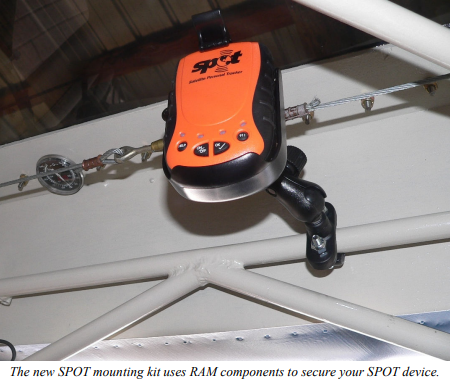
One of the best options out there is the SPOT transceiver (Satellite Personal Tracker). This unit is a Canadian design that uses both GPS and satellite phone technologies. The basic principle is that the unit will track its position with the onboard GPS receiver. The unit then communicates with the SPOT call center using satellite phone technology.
The unit has four functions. The first is the “911” function. When the “911” button is pushed and held for 5 seconds, a signal is sent to the SPOT call center with the unit’s location. The signal repeats every 5 minutes until deactivated. The SPOT center will contact the local authorities to dispatch emergency services to your location.
The second function is the “HELP” function. This function will send a predetermined signal with your location to a list of contacts provided by the SPOT owner. This can be done through e-mail, text messaging, or other web-based messaging services. This would be a useful function if you have a safe, forced landing and need someone to come and help.
The next function is the “OK” function. It works in the same way as the “HELP” function except that it sends an “all’s well” signal. If you use flight itineraries filed with a family member, this may be a useful way to close that itinerary.
These three functions are included with the basic $100 annual fee from SPOT. For an additional $50, you can subscribe for one of the best features that SPOT has to offer. The “Track Progress” function will leave an electronic breadcrumb trail by contacting the SPOT center every 10 minutes with your location. This can be viewed on the SPOT website by anyone with your SPOT information. If you do have an accident while flying, the SPOT transmitter will continue to broadcast your position, and it will be saved within the SPOT systems. If the SPOT is damaged or destroyed, your breadcrumbs will still be in the system up to the point where the crash occurred.
Now, here are the shortcomings. The SPOT unit only transmits the breadcrumbs every 10 minutes. At 100 mph, my Christavia will cover about 17 miles. Fortunately, with the previous breadcrumbs pointing the way, the search may be quicker than with a conventional ELT hit. However, I’d pay more to have the breadcrumbs every 3 to 5 minutes.
A second disadvantage is that the unit’s only source of power is a pair of AA lithium batteries. There is no provision for external power or rechargeable batteries. Granted, the batteries will last for 14 days of operation, but it would be a good idea to change the batteries at around the 7-day mark. I’ll be changing them at every oil change (about 50 hours) and use the old ones in a flashlight or something.
Finally, the pilot has to remember to turn the unit on as part of the pre-flight checks. It’s pretty useless otherwise.
Despite these drawbacks, I forked out the $170 to purchase one from GPS Central last week and have had a week to play with it.
 Calgary Recreational Flying Club YYC