
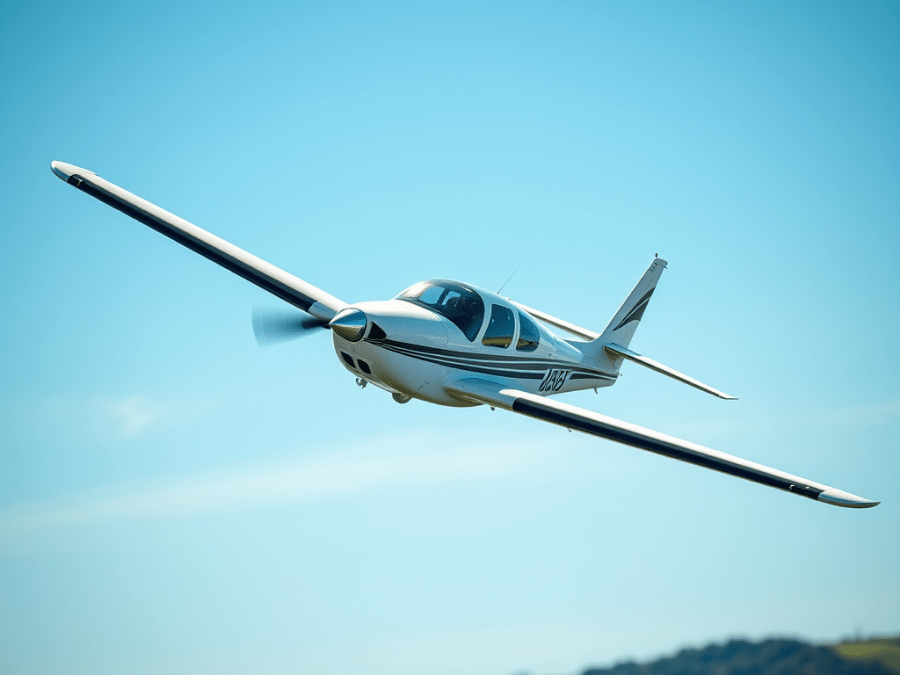
There is a move by many countries, including Canada, to accept the United States of America’s Light Sport Aircraft (LSA) standards. They are not that different from the Canadian Advanced Ultralight (AULA) regulations. In fact, reviewing the LSA standards, one sees that they are based on our AULA standards. Originally, the LSA maximum weight was proposed as 1232 lbs. A strange number for one of the only two countries in the world that still uses the old British weight and measure system. The other country is Liberia. It does, of course, translate to exactly 560 kg. The big difference between an AULA and LSA is the maximum weight of an LSA being 88 lbs greater than that of Canada’s Advanced Ultralight (1232 vs. 1320 lbs). LSA’s have a maximum specified speed, cannot be equipped with an in-flight adjustable propeller, or retractable gear. AULA’s do not have these restrictions. The last-minute change from 1232 to 1320 lbs was to allow the heavier American engines to be able to compete with the lighter foreign imports in the LSA market.
Another difference I see is the fact that the LSA “standards” are written under the auspices of the American Society for Testing and Materials (ASTM). My personal opinion is that ASTM is more of a book seller than anything else. The current Canadian Advanced Ultralight standards and regulations are available online for free. The LSA standards are contained in a number of separate books, the cost of which exceeds $100.00. Many of the Canadian aircraft manufacturers and importers prefer the Light Sport designation because of the “ultralight” stigma attached to the name Advanced Ultralight. Rather than accept the US Sport Pilot Standards, I would prefer we update our AULA standards to accommodate current shortfalls and differences, especially the addition of wording to allow the repair and maintenance of AULA’s other than by the approval of the original kit manufacturer. This could be accommodated with the same rules that apply to conventional or amateur-built aircraft. A weight increase to match that of the American LSA could also be included.
When I first was involved with ultralights, the maximum allowable weight of a basic ultralight was 420 lbs, with a gross weight of 960 lbs. The big concern those days was “overweight ultralights.”
I believe the same will soon hold true for the new breed of LSA’s. The largest-selling LSA’s are the CT and Evektor Sport Star. I believe the reason for this is their empty weights of 649 and 668 lbs, respectively. With two 200 lb pilots on board and 20 US gallons of fuel, there is still room for 150 lbs of baggage in the CT. The rest of the LSA’s out there weigh in at about 800 lbs, not leaving much room for people and fuel, let alone baggage. The extreme end of the scale is Cessna’s recently announced SkyCatcher, weighing in at 830 lbs with a 24-gallon fuel capacity. At full fuel with no baggage, the maximum occupant weight is 346 lbs. The fuel consumption of a Continental 0-200 is in the order of 6 to 7 US gallons per hour (GPH).
I see the best option for the type of aircraft our club members that want to fly with an ultralight permit to be amateur-built aircraft meeting current AULA standards. Yes, I own a factory-built LSA that meets and is registered as an AULA, and I have owned 3 different AULA’s in the past. There are some real negatives to owning a factory-built or kit-built AULA. The major one being that if repairs or modifications are needed, they must be approved in writing by the manufacturer. When we purchased our LSA/AULA, the manufacturer demanded that we use his 600 euro ($1000 CDN) pedestal mount compass. When we refused to purchase one, we were informed that he would not allow the modification of us putting in a different TSO’d compass. Yes, we paid $1000 for a compass. With an amateur-built, there are Transport Canada procedures that allow you to have repairs and modifications done by others or yourself.
Also, AULA’s must meet currency standards. For example, if you have a 582, it must be overhauled after 250 hrs or 5 years. If it is 912 powered, it must be overhauled after it is 10 years old, even if it has only accumulated 400 hours. Another aircraft option is a Basic Ultralight. I would only recommend this for single-seat aircraft. You cannot carry a passenger in a Basic Ultralight, even if you hold an instructor rating. A second person can only be in a Basic Ultralight if that person holds a valid flight license or permit other than a student pilot permit. Ultralights used for training must be registered as a training aircraft by an ultralight flight training unit. In addition, the instructor must be doing the training under the direction of a Transport Canada authorized person. Only 10 hours of accumulated flight time in a Basic Ultralight can be credited towards a Private Pilot License. On the other hand, one can complete their entire training in an amateur-built aircraft.
 Calgary Recreational Flying Club YYC