
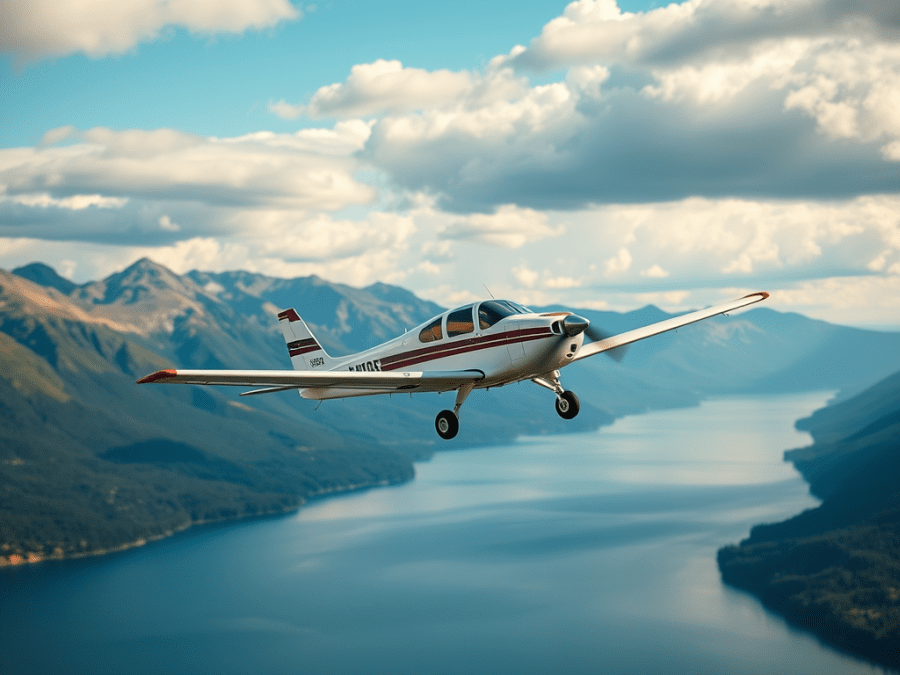
The Nelson fly-in breakfast has always been an attraction to me because of its location – nestled in the mountains on the west side of Kootenay Lake in British Columbia. A 6+ hour drive by car, but with proper weather and flight planning, the trip can easily be made in the RV for a quick breakfast turnaround and still be home in time for lunch.
My family and I had just spent the week with Ken and Renée Beanlands in Arlington, WA, and I had asked if he would like to join me on a trip to Nelson for their fly-in breakfast. He promptly agreed and planning took place.
The weather for that day was looking ‘iffy’ as rain was forecasted and strong westerlies. We decided to make the final decision in the morning as to whether we went or not.
We met at the Chestermere-Kirkby airport at 7:00 a.m. and made a call to Flight Services to file and confirm my weather findings on the Internet. The 40-knot winds were to be right on the nose at 12,000 ft along our southern route to Nelson, with a scattered layer forecasted between K-Country and the Columbia Valley. The best part about the weather was that the winds were showing a dying trend as the day went on. If it had been the other way around, we probably would not have gone. The plan was to go and see how rough it got, and if there was any wave activity, then we would make a decision to keep going or not.
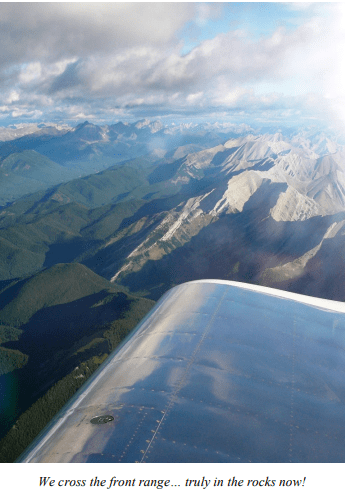
We were wheels up at 7:40 a.m. and cleared to climb to 10,500 ft through Calgary’s airspace on a direct route to Nelson. The air had a few bumps that progressively got worse as we neared the rocks, but the conditions weren’t too severe, so we kept plugging along. I had commented to Ken that it was strange that there was no sign of any wave activity because the wind strength and direction were perfect for it.
About five minutes later, the turbulence quit, and we then got our first free ride to 12,500 ft from a wave at just under 1,800 FPM. There were no bumps in it at all, and I was amazed how close we had to be to the rocks before we found that first wave. It would have been nice to just shut the engine down and hang out there for a while, but we had places to go!
The scattered clouds ahead of us were soon below, and it looked like we would fly over them. However, what goes up must come down, and just before reaching the cloud line, we were in the downside of the wave with a 1,800 FPM descent rate. It is very important not to fight it and just let the plane flow through the wave.

Minutes later, we had another free ride back up to 12,500 ft in the second wave. I kept the speed back so that the plane was ready for the big hit of turbulence. It never happened, but we had ground speeds as low as 80 knots in the worst locations – well over 50 knots on the nose. The wave location was clearly indicated by the cloudless parts of the sky. The lift of the wave quit just over the Elk Valley, and we remained at 12,500 ft until the Columbia Valley.
I gave a position report to Pacific Radio and also gave them a PIREP for others that might be making the same trip to the breakfast. Altitude is the key when the winds are this strong; peak flying is not recommended!

Andy Cumming from Lethbridge, in his RV-9A, heard us on the radio and gave us his position report. He was just getting close to Cranbrook and on his way to the breakfast as well. The lenticular clouds were much more pronounced to the south, but he said the ride was smooth most of the way through at 8,500.
We had a nice descent into the Columbia Valley as the base on the west side was at about 8,000 ft. The preferred route is to follow the pass west of Kimberley. There is a set of power lines and a road that can be followed to make your way through the valley to the pass that spits you out over beautiful Kootenay Lake. The base needs to be 7,500 ft to make the pass feel comfortable to squeeze through. We even saw sheep on the mountains as we whizzed through the valley!
We descended into Nelson to set up for the circuit. Andy was just ahead of us, so we knew what the circuit was before we got there. The circuit was a right-hand into 22. You cannot fly over the town or hit a mountain. Seeing as how town and mountains surround Nelson, we had to pay attention! Mountains filled the windscreen on crosswind, and we tucked in tight to the mountain on downwind. We had a tight turn to final as it needed to have a dog leg to stay clear of town. Touchdown was uneventful, and we taxied in for food. One and a half hours from wheels up to wheel down, even after fighting the strong headwind all the way.

After lots of hangar flying and full bellies, we were on our way. We filled the plane with fuel to open up our options if the weather turned bad. We climbed out westbound and then did a 180 to get on our way and to stay clear of traffic. We climbed to cloud base to make our way through the pass the same way we came. The base height had not changed, but there were now cumulus clouds forming below that were making the mountains look more closed in. We squeezed through the pass and made our way to the Columbia Valley.
The weather cleared, and we climbed above a scattered layer for a direct flight back to Calgary. The tailwinds had picked up, and we had 190 knots on the GPS burning 7 gph. The ride was smooth as glass, and we started our descent near Okotoks for our arrival into Chestermere.
One hour and five minutes for the return flight, and it was only 11:50 a.m. I was able to have a rest at home before the family and I made our way to the gathering at Kae and Glen’s. Ken and I had a great time flying, and I was happy to give him his first mountain flying experience for his 40th birthday!
 Calgary Recreational Flying Club YYC