
“No voyage is dangerous to the one who waves goodbye from the shore.”
I. Asimov
September’s topic was forced landings in which a mental checklist of the accepted procedures was given. It’s a good idea to commit the procedure to memory (or something) for rapid recall. The problem is that most pilots succumb to a form of temporary Alzheimer’s disease -when the engine quits, so does our memory!
A short review of the forced landing procedures is in order before discussing precautionary landings.
How’s your memory?
Pretend, for a moment, in the comfort and safety of your favourite armchair, that you’re flying alone and the engine suddenly quits. What do you do first? Second? For those who might have forgotten here’s a summary of the accepted procedures:
Porced Landing Procedure
- Maintain speed – stick ahead to get the nose down; retard the throttle to idle position.
- Select a field – taking into account wind direction and velocity, glide fetch, obstacles, hazards, etc.
- Plan the approach – and set up the approach.
- Cause check – check switches and valves.
- Restart attempt – if you have time.
- Concentrate – on approach and flare to landing.
These procedures sound straightforward and obvious – the natural thing to do, but experience shows just the opposite is true.
If these procedures are neglected, then gravity will select your landing site for you. Gravity likes to see flat feet, sagging breasts, and aeroplanes on the ground. The plane will get ahead of you and you will find yourself reacting to it rather than having it react to you. The trick is to use gravity. Use it wisely to control airspeed and sink rate.
These procedures are too important to just try and commit to memory. One needs to develop the ability to do them instinctively – by reflex – without resorting to memory recall. The memory bank will likely be empty. The only way I know how to do this is by repetition. At the risk of being redundant, I repeat, repetition. Drill yourself over and over again by going through the motions. Yes! Act it out – on the sofa, in your kitchen chair, sitting in your rooster rocket; better yet, do it while you’re driving along. Just pretend that your motor quit. What would you do? There is a certain similarity of co-ordination and divided attention required. If you run into someone, don’t blame me; it shows that you require more practice at splitting your attention. Good pilots don’t concentrate on one thing at a time to the exclusion of other things. They divide their attention between a number of tasks. This might explain why some ‘executive types’ and student pilots fail to learn to fly more quickly. They concentrate too much on one thing at a time as a carryover from their office work habits. Over the years, in a demanding office job, focused attention on the task at hand is essential. There’s a difference between dividing your attention and having a wandering mind. It does not follow that imbeciles with unfocused thinking make good pilots. The secret is to divide your attention among all the tasks at hand.
Forced landings bring out the best (and worst) in a pilot – a time when the art and science of flight really come together. There is no substitute for really knowing the characteristics of your machine – its glide distance, its sink rate, its slip rate …. By acting out the forced landing procedures, your actions will become automatic – almost! In a real “flameout”, the suddenness of an engine failure has a way of surprising most pilots. It may take a few seconds to do the right things, in the right order. Just don’t panic! Following the proven procedures results in the best chance of successfully dead-sticking your machine. Neglecting these procedures will turn the pilot into a passenger who is unlikely to take timely, decisive action. Indecision uses up valuable time and altitude just when you need it most. The true value of the proven procedures is unlikely to be realized until you’ve actually experienced a forced landing and reflected on your own performance. Good luck!
The Precautionary Landing
“Going there may be most of the fun, but only if you get there in the end.” I. Asimov
The precautionary landing is usually defined as one done under full control of the aircraft, i.e., the engine is operating just fine. Listed below are the things that may create a precautionary landing.
Reasons for the precautionary landing:
- Weather
- Low on fuel
- Minor engine/aircraft problems
- Lost
- Darkness
- Coffee, pee or stretch break
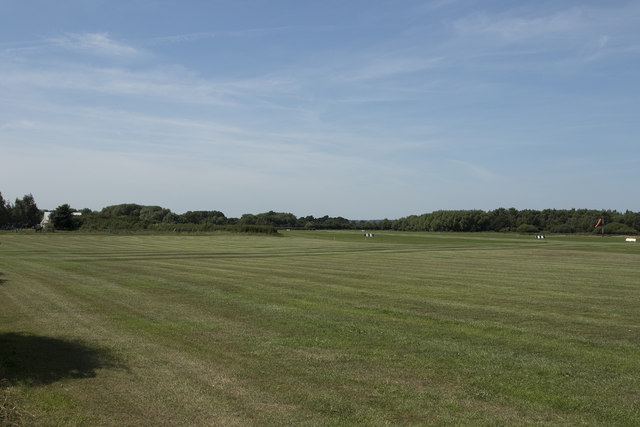
All of the above things will exert pressure (stress) on the pilot – essentially because you will be landing at an unfamiliar field. In my mind, landing at an unfamiliar strip should automatically be considered as a precautionary landing. Most of us operate from unprepared (i.e., unpaved) strips where conditions can change with the weather, the seasons, and with other inhabitants who use it (gophers, badgers ••••).
Learning to land your aircraft on an unfamiliar strip is a useful skill to acquire. It gives you a lot more flexibility in using and enjoying your machine. It also gives you confidence in knowing you can land your aircraft just about anywhere, whatever the reason. One man’s familiar strip is another man’s unfamiliar strip. All it takes is some planning to land out at an unfamiliar strip.
Landscape or Landscape?
But, just because someone else lands there regularly does not imply that you can go unprepared. Consider a precautionary approach to any strip with which you’re unfamiliar. It might be a friend’s strip, an outlanding at a “new-to¬you” strip, a prepared runway, a pasture or a hayfield. Whatever the reason, a little advance planning is in order. Get whatever information you can about strips in your area that you might want to land at. Visit them and get a “feel” for the lay of the land, hazards on approach and any unique obstacles. Look them up in the Canada Flight Supplement, which you can purchase new for $10-$15 or get an old copy from one of your pilot friends. Invest $8 in the Alberta Aviation Council map and handbook to familiarize yourself with the local strips. This way, landscape does not become landscrape.
Even with all the info at hand, it’s considered good practice to overfly the strip to get an overview. A low pass, or overshoot will get you info on such things as:
Precautionary landing checklist:
- Wind velocity and direction;
- Orientation of runways) vs the wind and condition of the surface;
- Relief or topography of the runway (slope, swells and swales)
- The presence of any obstacles or hazards (powerlines, trees, buildings).
Be especially alert to any buildings or trees on the upwind side of a runway, when a crosswind is present. I’ve often found these create wind gradients and turbulence of which you need to be aware on short final.
If in doubt, do another or a second overshoot approach to get the above things sorted out. Then, land with confidence and control. It might also be a good idea to consider the above checklist before any landing. Did you check the windsock on short final during your last “ordinary” landing? I didn’t – and the wind had switched 180 degrees, making for a long rollout. Another lesson learned; another humbling experience. My aeroplane is a good teacher -sometimes I wish I were a better student.
P.S. I don’t think there is any substitute for “walking out” any strip, especially before taking off. It gives you the best feeling for the suitability of a strip; then, your precautionary landings will go without any hitches.
Fly safely.
 Calgary Recreational Flying Club YYC